A few years after buying, you discover that the sanitary fittings in your French home are not connected to the sewer: the waste water runs into the rainwater downpipe. Can you obtain redress, and in what form? The ruling of the Paris Court of Appeal of 27 October 2017 (case no. RG 16/03843) answers those questions and shows how the judge calculates the refund of part of the price. It also illustrates the place of a valuation report in this kind of dispute.
The facts
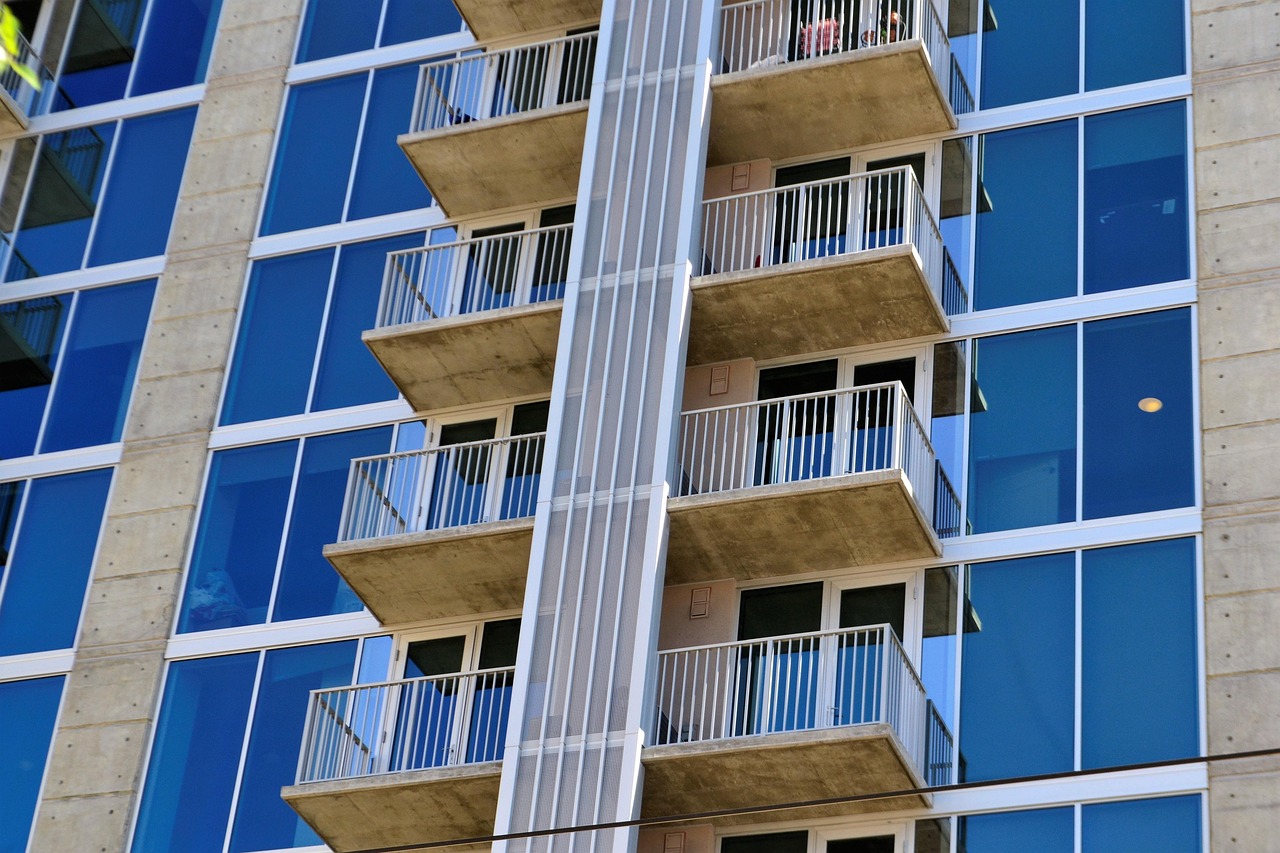
In 2007, a buyer paid €67,000 for a 10.4 m² room on the sixth floor of a Paris building, with a right to use a shared WC. The room had sanitary fittings. He later found that their outlet was not connected to the waste water network: a pipe ran it into the shared gutter, which was reserved for rainwater.
The situation combined several difficulties: a sanitary non-compliance, a ban on this type of connection by the co-ownership (the copropriété, the French condominium regime), the risk of the outlet being blocked when the gutter was repaired, and legal uncertainty over whether the fittings could stay.
The hidden defect warranty
Article 1641 of the French Civil Code provides that the seller is bound by a warranty against hidden defects (vices cachés) in the thing sold which make it unfit for its intended use, or which so reduce that use that the buyer would not have bought it, or would have paid a lower price, had he known of them.
Three conditions must be met:
- The defect predates the sale. Here, the buyer had not altered the installation.
- The defect is serious. It makes the property unfit for its use or greatly reduces its usefulness. The expert appointed in the case put the loss of value at €64,480.
- The defect is hidden. It was not apparent at the viewing and a normally diligent buyer could not have detected it.
The buyer then has the choice opened by article 1644 of the Civil Code: return the thing and recover the price (rescission), or keep the thing and recover part of the price (price reduction). If the seller knew of the defect, he also owes full damages (article 1645).
Was the defect really hidden?
The seller argued that the connection to the external gutter could be seen by looking up from the street. Should the buyer not have noticed it?
The court applied the standard of the reasonable buyer, who views the property seriously but cannot see beyond appearances. It noted that the buyer “lacked the skills of a building technician” and that “nothing shows that he could have realised for himself, by simply observing the façade and viewing the property sold, that it was non-compliant”. The presence of sanitary fittings with an outlet raises a presumption that they work normally.
The principle is simple: the buyer does not have to be a professional. What an expert spots at the first visit is not necessarily apparent to him.
The exclusion clause and bad faith
Deeds of sale most often contain a clause by which the buyer waives the hidden defect warranty. Article 1643 of the Civil Code allows that stipulation. Settled case law nonetheless sets it aside where the seller knew of the defect: the clause does not protect a seller in bad faith.
That was decisive here. The seller had received, by registered letter of 28 May 1999, a notice from the managing agent (syndic) recalling that, following a resolution of the general meeting, co-owners whose waste water outlet was connected to the shared gutter had to carry out works to bring it into compliance, failing which their irregular outlet would be blocked when the gutter was repaired.
The court inferred that the defect was hidden and that the seller, “who knew of it, said nothing to the buyer and was a seller in bad faith”. The exclusion clause therefore could not apply.
The time limit for bringing a claim
Article 1648 of the Civil Code requires the claim to be brought within two years of discovery of the defect. The starting point is not the date of purchase but the date on which the buyer became aware of the defect. In the case commented on, the purchase dates from 2007 and the ruling from 2017: it was the date of discovery that made the claim possible.
Calculating the refund
The buyer did not seek to have the sale cancelled but a partial refund of the price. Two elements guided the court.
Only partial unfitness. Bringing the installation up to standard was technically possible; an architect’s study showed it. The buyer “does not prove that he has lost all chance of managing to let it”. The property retained a value: €8,500 per m² according to a 2010 estimate.
A latent capital gain. Bought for €67,000 in 2007, the property was worth about €88,400 in 2010 (€8,500 per m² × 10.4 m²), €21,400 more than the price paid, despite the defect.
The first-instance court had awarded €35,000. The Court of Appeal reduced the refund to €20,000, taking into account the repairable nature of the defect and the favourable movement in value.
This reasoning is that of a property loss-of-value report: the loss is measured by the difference between the value of the property with and without the defect, at a given date, taking into account the cost and feasibility of repair. A documented figure, supported by market evidence, carries weight in the debate.
The drainage inspection, the seller’s protection
Since the facts of this case, the rules have changed. For a property not connected to the public sewer, the French Public Health Code requires the report of the inspection of the private sewage system (septic tank or similar) to be attached to the sale (article L. 1331-11-1). For properties connected to the public sewer, there is no national obligation, but many municipalities require a compliance inspection of the connection before sale, and notaires (French civil-law notaries, who draw up the deed) commonly ask for it.
The inspection is carried out by the body managing the municipality’s sewerage, whether in-house or a contractor, at a cost generally between €100 and €200. Once the report has been produced, the buyer knows the precise condition of the installation: the defect is no longer hidden and the seller is protected from any accusation of concealment.
Practical advice for the buyer
Ask for the surveys and documents. The technical survey file required by the French Construction and Housing Code (article L. 271-4) includes in particular the DPE (energy performance certificate), the risks statement, the asbestos, lead, termite, electrical and gas surveys depending on the age and location of the property, and the private sewage inspection where applicable. In a co-ownership, the minutes of the last general meetings and the co-ownership regulations reveal past notices, such as the one from 1999 in this case.
Get support before signing. The court noted that “the expert immediately spotted the non-compliance at his first visit to the building”. A private (single-party) valuation before purchase, within the meaning of the Charte de l’expertise en évaluation immobilière (French property valuation charter, 6th edition, November 2025, Title I, § 1.1), makes it possible to check that the documents are consistent and to place the price against the market. The Charter specifies that valuation expertise is distinct from technical surveys: the valuer does not replace the surveyor, but he knows when to call on one.
Consult your own notaire. Each party may be assisted by its own notaire at no extra cost for the deed.
Provide for conditions precedent. In a tight market, it is hard to take your time. A condition precedent such as “subject to a compliant drainage inspection” allows you to sign without committing blind: if the condition is not met, the sale does not go ahead.
The most frequent hidden defects
Beyond drainage (non-compliant connection, undeclared septic tank), disputes often concern the structure (concealed cracks, sagging floors), damp (water ingress, rising damp, mould hidden under fresh paint), pests (termites, dry rot, house longhorn beetle) and faulty installations. In each case the same question returns: what is the property worth with the defect, and what does it cost to put right?
Key points
For the buyer: ask for all the documents, get support before signing, provide for conditions precedent, act within two years of discovery. For the seller: have the drainage inspection carried out and declare known defects, because the exclusion clause does not cover what you knew. Disclosing a defect and reflecting it in the price costs less than a lawsuit.
Further reading
The Property loss of value page explains how I quantify a loss of value. On the same theme, you can read Damp wall: does the price reflect the defect? and Can a property sale in France be cancelled “because I was taken in”?.
What next
Has your property lost value because of a third party?
Neighbouring construction, hidden defect, wrong floor area, overpayment at purchase: the loss of value and the loss of enjoyment quantified with the method accepted by French courts.
Free quote, by email or by phone. No commitment before the quote is accepted. Fees are never linked to the value of the property (Charte de l’expertise, Title I, §2.1).