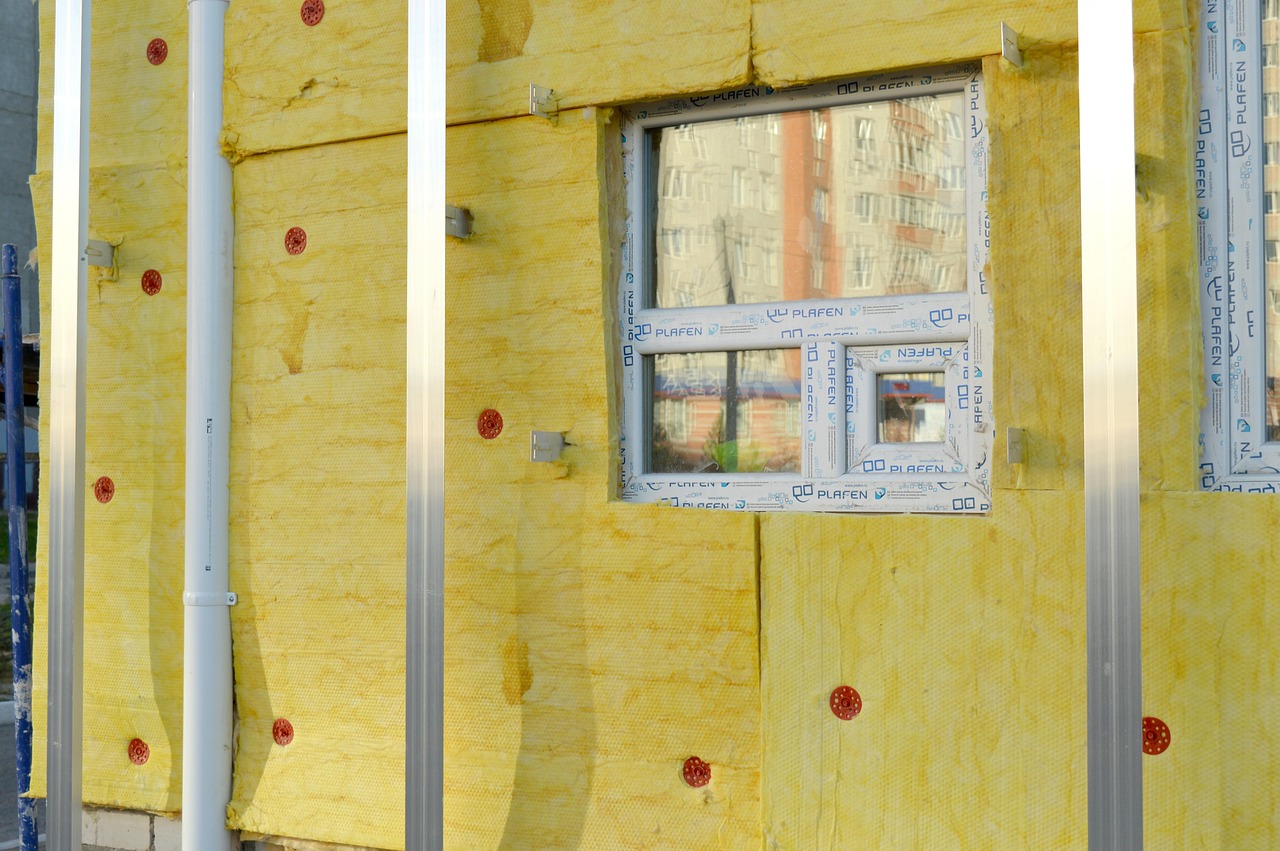
You had your walls insulated or your windows replaced hoping to halve your energy bill, and the drop you see is more modest. Or you are buying a renovated property and wonder what the advertised savings are worth. This article summarises what French public statistics measure about actual consumption after works, then explains why energy performance nevertheless weighs on lending and on value, and how I treat it in a valuation.
What the public statistics measure
A study by the SDES (Service des données et études statistiques), the statistics office of the French ministry for ecological transition, compared households’ actual energy consumption before and after works with the savings calculated by the conventional method. The results, published in 2025, are clear: the savings observed are often half the theoretical savings.
- Wall insulation: about 70 % of the advertised savings are actually achieved, the best result.
- Loft insulation: about 50 %.
- Window replacement: only about 40 %.
Several factors explain this gap. The first is the behaviour of the occupants: a better insulated home is often heated more, to a more comfortable temperature, what economists call the rebound effect. The second is the quality of the workmanship, which varies from one site to another. The third lies in the assumptions of the conventional calculations, which use a standardised climate and pattern of use, different from real conditions.
The Charte de l’expertise en évaluation immobilière (the French property valuation charter, 6th edition, November 2025, Title IV, § 1.6) makes the same observation about the DPE (diagnostic de performance énergétique, the French energy performance certificate): it informs according to a conventional calculation, and “the conventional calculation method does not make it possible to assess the actual consumption of buildings”. It remains a first level of information, compulsory and legally binding, but it does not replace the bills.
Why banks take an interest
Since 2024, European credit institutions have published their Green Asset Ratio, the share of their lending allocated to assets aligned with the EU taxonomy of sustainable activities. For residential property, alignment depends in particular on the energy band of the property financed. The first ratios published were low, in the region of 3 % of assets.
This transparency requirement, combined with the revision of the European regulation on capital requirements (Regulation (EU) 2024/1623), pushes banks to qualify the energy risk of their security more precisely. TEGOVA’s EVS 2025 draw the consequences: guidance note EVGN 2 describes the prudent valuation criteria applicable to mortgage lending, and Part VI asks the valuer to consider transition risks, including energy obsolescence.
In practice, at the date of this article, several banks applied stricter conditions to properties rated F or G, and some offered preferential terms for well-performing properties. What is looked at is not the actual consumption but the rating and the regulatory deadline attached to it.
The effect on prices, sector by sector
Existing homes. In 2025 the notarial market observatories measured an average discount of around 3 to 4 % for properties rated F or G compared with better-rated comparable properties, with wide variations by region and type of property. This discount grew as the deadlines of Law no. 2021-1104 of 22 August 2021 approached: a ban on letting homes rated G since 1 January 2025, F in 2028, E in 2034.
Rental property. Investors anticipate these deadlines. A property rated F or G intended for letting is negotiated with the cost of compliance works in mind, which matches the residual method described in EVS 6 of the EVS 2025.
Offices. The premium attached to well-rated buildings has become established there; in 2025 market studies quoted a gap of around 5 % between an efficient building and an equivalent energy-hungry one. The obligations of the décret tertiaire (the French energy reduction rules for commercial buildings) and the criteria of institutional investors explain this gap.
Owner-occupied homes. The effect remains more moderate, but it grows in areas where supply allows buyers to be selective.
The Charte sums it up in its § 1.17: “green value” does not exist as such, but environmental criteria may have a positive or negative effect on value depending on the market. It is this effect, observed in transactions, that the expert must measure.
What I take from this in a valuation
The starting point is the definition of market value (Charte, Title III, § 1.1): the amount for which the property would exchange, on the valuation date, between willing and informed parties. The expert reports what the market makes of the rating, not what it should be worth in theory. To do so:
- I record the band, the date of the certificate and the calculation method, because a DPE from 2020 and a DPE from 2026 are not read in the same way;
- I ask, where available, for the bills of the last three years, which give the actual consumption;
- I check whether a regulatory deadline applies to the property, depending on whether it is let or owner-occupied;
- I look for sales of properties in a comparable band in the same area, and I record the actual price gap, whether small or marked;
- when the residual method is required, I rely on an energy audit or quotes to cost the works, rather than on a ratio per square metre.
What this means for you
If you are selling. A property rated F or G is not unsaleable; it sells with a discount that reflects the cost of the works and the applicable deadline. Having an energy audit and quotes to hand makes the discussion objective.
If you are buying. The savings advertised after works should be weighed against the orders of magnitude above. The actual bills of recent years are a better basis than the rating alone. The cost of the works belongs in the overall budget of the purchase.
If you are renovating. The works whose measured efficiency comes closest to the forecasts are wall and roof insulation. Window replacement on its own produces the widest gaps between forecast and reality. Detailed quotes, compared with one another, are worth more than a theoretical estimate.
If you are investing. Properties rated F and G are only attractive if the price fully reflects the works, the lead times and the regulatory uncertainty. Properties rated C, D or E with a realistic potential for improvement offer a clearer balance of risk and return.
The essentials
Actual energy savings after works are often below forecasts, by a third to a half depending on the type of work. The regulatory and financial effect of energy performance, on the other hand, is very real, because it attaches to the rating and to the legal deadlines, regardless of actual consumption. A poorly rated property keeps a value; it simply has to be measured with the right data.
Further reading
The Market value page describes the method I apply. On the same theme, you can read Energy rating and property prices: the limits of the statistical analysis and European Valuation Standards 2025: how the new rules change your property projects.
What next
Do you need a value that will stand up before a notaire, a judge or the tax authorities?
Inheritance, divorce, gift, tax audit, guardianship: I tell you which report you need, in what timeframe and at what price.
Free quote, by email or by phone. No commitment before the quote is accepted. Fees are never linked to the value of the property (Charte de l’expertise, Title I, §2.1).